




What is the difference between a deep groove ball bearing and a spherical roller bearing?
 Feb 13, 2026|
 When it comes to the world of mechanical engineering and industrial applications, bearings play a pivotal role in ensuring the smooth operation of various machinery. Among the numerous types of bearings available, deep groove ball bearings and spherical roller bearings are two of the most commonly used. As a supplier of deep groove ball bearings, I often encounter inquiries about the differences between these two types of bearings. In this blog post, I will delve into the characteristics, applications, and advantages of each, providing a comprehensive comparison to help you make an informed decision for your specific needs.
Structure and Design
The most fundamental difference between deep groove ball bearings and spherical roller bearings lies in their structure and design.
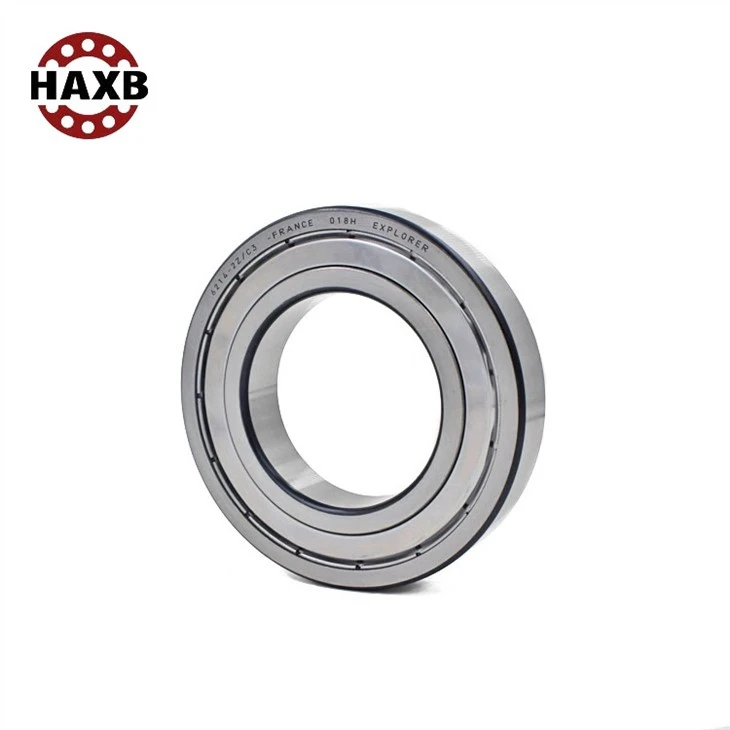
Deep groove ball bearings are characterized by their simple yet efficient design. They consist of an inner ring, an outer ring, a set of balls, and a cage to hold the balls in place. The raceways in both the inner and outer rings are deep grooves, which are designed to accommodate the balls and allow them to roll smoothly. This design enables deep groove ball bearings to support both radial and axial loads in both directions, making them highly versatile. The balls in these bearings are typically made of high - quality steel, which provides excellent hardness and wear resistance.
On the other hand, spherical roller bearings have a more complex structure. They feature two rows of rollers with a common spherical raceway on the outer ring and two non - spherical raceways on the inner ring. The rollers are guided by a cage, and the spherical shape of the outer ring raceway allows the inner ring and rollers to align themselves automatically. This self - aligning feature is one of the most significant advantages of spherical roller bearings, as it can compensate for misalignment caused by shaft deflection or mounting errors.
Load - Carrying Capacity
Load - carrying capacity is a crucial factor to consider when choosing a bearing.
Deep groove ball bearings are suitable for applications with relatively light to moderate radial and axial loads. Their ability to handle axial loads depends on the contact angle between the balls and the raceways. In general, they can handle small to medium axial loads in addition to radial loads. For example, in electric motors, deep groove ball bearings can support the radial forces generated by the rotating shaft as well as the small axial forces due to belt tension or magnetic pull. However, when it comes to heavy - duty applications with high radial and axial loads, deep groove ball bearings may reach their limits.
Spherical roller bearings, on the contrary, are designed to handle heavy radial loads and moderate axial loads. The two - row roller design distributes the load over a larger area, allowing them to withstand much higher loads compared to deep groove ball bearings. This makes them ideal for applications such as mining equipment, paper mills, and large - scale industrial machinery, where heavy loads are common.
Speed Capability
The speed at which a bearing can operate is another important consideration.
Deep groove ball bearings are known for their high - speed capabilities. The smooth rolling action of the balls and the relatively low friction between the balls and the raceways enable them to operate at high rotational speeds. They are commonly used in high - speed applications such as electric fans, where the motor needs to rotate at a high speed to generate sufficient airflow. For instance, our 6215 Fan Bearing is specifically designed for high - speed fan applications, providing reliable performance even at elevated speeds.
Spherical roller bearings, while capable of handling heavy loads, have a lower speed limit compared to deep groove ball bearings. The larger size and more complex structure of the rollers result in higher friction and more heat generation at high speeds. Therefore, they are more suitable for applications with lower to moderate rotational speeds.
Misalignment Tolerance
Misalignment can occur in machinery due to various reasons, such as shaft deflection, thermal expansion, or improper mounting.
Deep groove ball bearings have limited misalignment tolerance. Even a small amount of misalignment can cause uneven loading on the balls and raceways, leading to increased wear, noise, and reduced bearing life. In applications where precise alignment is difficult to achieve or maintain, deep groove ball bearings may not be the best choice.
Spherical roller bearings, with their self - aligning feature, can tolerate significant amounts of misalignment. The spherical outer ring raceway allows the inner ring and rollers to adjust their position automatically, ensuring that the load is distributed evenly across the rollers. This makes them a popular choice for applications where misalignment is inevitable, such as in long - shaft systems or in machinery subject to vibration.
Applications
The differences in structure, load - carrying capacity, speed capability, and misalignment tolerance determine the typical applications of each type of bearing.
Deep groove ball bearings are widely used in a variety of industries and applications. In the automotive industry, they are used in wheel hubs, transmissions, and electric power steering systems. In the household appliance sector, they are found in washing machines, refrigerators, and air conditioners. They are also commonly used in small electric motors, precision instruments, and office equipment. Our 6230 Motor Bearings are specifically designed for motor applications, providing reliable performance and long service life. Additionally, Small Deep Groove Ball Bearings are often used in miniature motors and electronic devices.
Spherical roller bearings are mainly used in heavy - duty industrial applications. In the mining industry, they are used in crushers, conveyors, and grinding mills. In the steel industry, they are employed in rolling mills and continuous casting machines. They are also commonly used in marine propulsion systems, large - scale pumps, and heavy - duty gearboxes.
Advantages of Deep Groove Ball Bearings
As a supplier of deep groove ball bearings, I would like to highlight some of the advantages of these bearings. Firstly, their simple design makes them relatively inexpensive to manufacture, which translates into cost - effective solutions for many applications. Secondly, their high - speed capabilities and low friction make them energy - efficient, reducing power consumption and operating costs. Thirdly, they are easy to install and maintain, which can save time and labor costs.

Conclusion
In conclusion, deep groove ball bearings and spherical roller bearings have distinct characteristics and are suitable for different applications. Deep groove ball bearings are ideal for light to moderate load, high - speed applications where precise alignment can be maintained. Spherical roller bearings, on the other hand, are better suited for heavy - duty applications with high radial loads, moderate axial loads, and potential misalignment.
If you are in need of deep groove ball bearings for your specific application, I encourage you to contact me for more information. I can provide you with detailed product specifications, technical support, and competitive pricing. Whether you need standard or custom - made deep groove ball bearings, I am committed to meeting your requirements and providing you with the best solutions.
References
- Harris, T. A., & Kotzalas, M. N. (2007). Rolling Bearing Analysis. Wiley.
- Zorzi, C., & Frosini, L. (2013). Handbook of Bearings. Elsevier.