
Professional Team
Professional sales team and engineer team provide professional technical Support,Test video and Sample support
High Quality
Our products are manufactured or executed to very high standards, using the finest materials and manufacturing processes.
Competitive Price
We offering a higher-quality product or service at an equivalent price. As a result we have a growing and loyal customer base.
24H Online Service
If you have difficulties when using the product, we will respond to your needs as soon as possible and give you the greatest support.
Types of Roller Bearing
Cylindrical Shaped Roller Bearings
As the name suggests, cylindrical roller bearings are a particular type of roller bearings in which cylinders are used as rolling element and separating medium. Because of the inner flat surface, this type of bearings offers a larger contact area on inner and outer rings. Cylindrical roller bearings are most suitable for applications where high performance and high load capacity is needed.
Tapered Shaped Roller Bearings
Tapered roller bearings come in different sizes and structures; unlike most of the other bearings types, in tapered roller bearings the outer ring is called cup and the inner ring is called cone because of their shape. This type of bearing is usually consists of four basic elements which are cup, cone, tapered rollers and cage that holds those rollers in right place.
Spherical Roller Bearings
Spherical roller bearings are designed to accommodate heavy loads, heavy vibration and misalignment. As a result of greater internal radial clearance versus deep groove ball bearings, special shaft and housing fits as required. Their ability to support heavy vibration and misalignment makes them ideal for applications for the aggregate industry and vibrator/shaker motors as well as gear boxes, large electric motors, generators and other heavy-duty applications.
Needle Roller Bearing
A needle roller bearing is a special type of roller bearing which uses long, thin, cylindrical rollers resembling needs. Their rolling elements are small in diameter and long in length. Needle roller bearings are compact in size, can carry high radial loads and have limited speeds. They can be supplied with or without an inner race and are typically found in the aerospace industry, rocker arms, cam followers, gearboxes, vehicle transmissions, prop shafts and more.
Thrust Roller Bearings
Thrust bearings handle just thrust loads and have minimal radial load capacity. Similar to other types of roller bearings, roller thrust bearing uses rollers. They have self-aligning capabilities and convex rollers.
Gear bearings
Roller bearings that combine with epicyclical gear are known as gear bearings. A concentric alternation of gear wheels and rollers with equal gearwheel pitch and roller diameters is used to depict each component. Conjugated rollers and gear wheels have identical widths when used in pairs. The engagement is herringbone-shaped or skews of the end faces. A gear bearing could be utilised as a kinematically simple planetary gear mechanism in timepieces and measuring devices.
When Choosing The Right Roller Bearing, Several Critical Factors Must Be Considered
Load Capacity
Determine the magnitude and direction of the load the bearing will support, whether it’s radial, axial, or a combination of both.
Speed
Consider the rotational speed of the application as excessive speed can impact bearing performance.
Environmental Conditions
Evaluate the operating environment, including temperature, humidity, and exposure to contaminants, as these factors can affect bearing life.
Alignment and Misalignment
Determine if the application requires the bearing to handle misalignment, and select a suitable type accordingly.
Space Constraints
Consider the available space within the machinery, as compact solutions like needle roller bearings may be necessary in tight quarters.
Precision Requirements
Some applications demand high precision, such as those in the medical or semiconductor industries.
Use Of Rolling Element
In both Roller Bearing and Ball Bearing, there is a rolling element, cage and bearing rigs that consist of a bearing. When the rolling element in the bearing is a spherical ball then it is simply termed as a ball bearing.
Roller Bearings Are Designed To Withstand Heavy Loads
The Roller Bearings use rollers in the place of balls which makes them capable to be used in radial and axial loads where misalignments are possible. In varied cases, they are used in automobiles like trucks, buses and vehicles.


Distribution Of Loads
In the case of ball bearing, they work to transfer loads from outer raceway to inner raceway while in roller bearing it distributes the load over the large area making it desirable to manage load in a better way as compared to ball bearing. This happens due to line contact which makes it capable of handling resistance and shocks.
Which Bearing Is Better
Both ball bearings and roller bearings may have different capacities, the roller bearing may be good in terms of shock and high resistance conditions while ball bearings might be good for operability at higher speeds.
Based on specific requirements, such as load directions and stiffness, a roller bearing may consist of one or two rows of rolling elements. The bearing configuration supports and directs the shaft or load radially or axially relative to other components like casings. Two support blocks, either mounted on both ends or intermittent, must clamp the shaft without using bolts.

Locating And Non-Locating Bearing Configuration
In a locating configuration, the bearing support touches the shaft axially. On the other hand, a non-locating bearing arrangement provides axial displacements due to the difference in thermal expansion or strain between the shaft and the housing. Furthermore, it offers higher component tolerance, affecting the distance between the bearings.
Adjusted Bearing Configuration
In an adjusted bearing configuration, the shaft moves back and forth; one bearing support allows for positive displacement while the other (cross-located) enables shaft location in the opposite direction. Users must first adjust the clearance when mounting the component. Examples of roller bearings with such a configuration are the tapered roller bearings (discussed below).
Floating Bearing Configuration
In a floating arrangement, cross-located bearing and the contact components freely move axially or radially over varied distances between the two endpoints. The difference in thermal expansion between the shaft and housing and the component's tolerances determines the floating distance. Spherical and deep-grooved bearings are examples of roller-element bearings with a floating configuration.
To appreciate how roller-element bearings function, first, it would be best to understand their design. A bearing may contain balls, ball rollers, tapered rollers, or needle rollers. They feature an inner and outer ring with raceways for the caged parts. They also include a lubricant to reduce friction and seals to prevent the entry of particles that might contaminate the oil.
The pockets within the cages separate the rolling elements and maintain constant spacing as the apparatuses roll in the race tracks. As aforementioned, roller bearings come in different configurations, including single- and double-row elements.
The cylinders between the inner and outer races enable the caged elements to roll in the raceways along a single axis. The rolling elements would slide out of position under operation without the cages, causing bearing failure. The cages don't handle any loads, and their purpose is to hold the rollers in place. There are also cage-free bearings called full complementary bearings (FCB). Usually, FCBs have more rolling elements, handling heavier loads. Another upside is that they can withstand sudden shock loads as the rollers evenly distribute the load throughout the raceway.
There's also a need to lubricate roller bearings. Whether or not to grease depends on the product you buy. Sealed roller bearings typically come pre-lubricated, and no additional greasing is required. Non-sealed ones need a lubrication plan called elastohydrodynamic lubrication and must adhere to the manufacturer's specifications.
In this greasing regimen, a lubricant, usually less than one micron, is applied with pressure levels reaching up to 34,500 bar (500,000 psi). The grease partially solidifies and elastically deforms the rolling elements and the contact surface. Any contamination of the oil can lead to significant degradation of the mating surface and can result in the build-up of more wear particles.
Roller Bearings, Including Cylindrical, Tapered, Spherical, And Needle Bearings, Are Constructed From Four Fundamental Components
Inner Ring
The inner ring is the component connected to the rotating shaft. It serves as the primary load-bearing surface of the bearing and interacts directly with the rollers. The design and geometry of the inner race is critical to bearing performance and must be properly mounted to the shaft to ensure effective load distribution.
Outer Ring
The outer ring, which surrounds the inner ring and provides a fixed mounting surface for the bearing. It is connected to the housing or machine structure. Just like the inner ring, the design of the outer ring plays a vital role in the operation of the bearing. It must be securely positioned within the bearing housing.
Rollers are the load-carrying elements of the bearing. These cylindrical, tapered, spherical, or needle-shaped components transmit the applied forces and enable smooth rotation. The design of the rollers varies depending on the bearing type and application. Cylindrical rollers are typically found in cylindrical roller bearings, while tapered rollers are used in tapered roller bearings, and so on.
Cage (Roller Retainer)
The cage, also known as the roller retainer or separator, is a crucial component that maintains the spacing and alignment of the rollers within the bearing. It prevents the rollers from coming into direct contact with each other, which could lead to friction and wear. Additionally, the cage aids in evenly distributing the lubricant within the bearing. The material and design of the cage can differ based on the specific bearing requirements.
Selecting The Right Roller Bearings For a Specific Application Requires Considering Several Factors
Load Requirements
Determine the magnitude and type of load the bearing needs to support, whether radial, axial, or combined.
Speed
Consider the rotational or linear speed at which the bearing will operate to ensure it can handle the required RPM.
Operating Conditions
Evaluate environmental factors such as temperature, humidity, and exposure to dust or chemicals that may affect the bearing’s performance.
Space and Design Constraints
Consider the available space and the bearing’s size, design, and mounting requirements.
The bearing needs to leave a certain gap during installation so that it can rotate freely during work. However, if the gap is too large or too small, it may cause the bearing to run poorly, so it must be adjusted according to the bearing size and work requirements.
Cleaning
It is very important to keep the bearings clean. Every time the lubricating oil is replaced, the bearings should be cleaned and checked for abnormalities, such as foreign matter, damage, etc.
Regular lubrication
Bearings need to be adequately lubricated during use to reduce wear and friction. Therefore, it is necessary to regularly add an appropriate amount of lubricating oil or grease to the bearings, and pay attention to the cleaning and replacement of the grease.
Regular inspection
Bearings will experience wear and fatigue during work, so bearings must be inspected and replaced regularly to avoid failures and affect the normal operation of the equipment.
Here are the answers to what loads are roller bearings best suited for
Roller bearings are well-suited for handling heavy radial loads and some axial loads. The cylindrical rollers inside the bearing are designed to handle primarily radial forces - forces perpendicular to the axis of rotation. The large contact area between the rollers and inner/outer races allows roller bearings to support heavy radial loads without excessive wear.
Tapered roller bearings can handle combined radial and thrust loads because the rollers are tapered, unlike cylindrical roller bearings which handle radial loads. The angled faces of the inner and outer rings in tapered roller bearings allow them to support axial/thrust loads acting parallel to the axis of rotation. However, they cannot handle the same magnitude of axial loads as dedicated thrust bearings like ball thrust bearings or plate thrust bearings.
In applications like vehicle wheel hubs, conveyor rollers, gearboxes, pulleys, rail car axles, and industrial fans, roller bearings excel because they predominantly deal with radial loads. The rollers handle circumferential loads very well. Roller bearings may have cages/guides between the rollers to keep them evenly spaced and prevent skewing under load. heavy radial loads with some axial loading capacity make roller bearings a versatile choice for rotary motion control compared to plain bearings or bushings.
Here are some tips to help prevent roller bearing failure:
Proper lubrication
Make sure the bearing is lubricated with the proper type and amount of grease or oil. Improper lubrication is a major cause of premature bearing failure. Re-lubricate at appropriate service intervals.
Protect From Contaminants
Keep dirt, moisture, dust and other contaminants away from the bearing. Contamination can cause the grease to break down or particles to get between the rollers and races, leading to wear and fatigue. Use seals or shields to help protect the bearing.
Align The Bearing Properly
Misalignment stresses the bearing and leads to uneven and accelerated wear. Make sure the bearing is aligned properly within the housing and with any shafts. Use alignment tools during installation.
Control Loading And Vibration
Overloading the bearing or excessive vibration can cause fatigue cracks and spalling. Make sure the bearing application stays within the load rating limits and control external vibration sources.
Proper Fitting And Handling
Use appropriate installation and removal tools to prevent damage to the bearing during fitting. Avoid hammering or forcing the bearing onto a shaft or into a housing.
Inspect Regularly
Check bearings periodically for noise, looseness, lubricant condition and wear particles. Scheduled inspections and replacement at the first signs of wear can help avoid failure during operation.
How To Determine The Correct Size Of Roller Bearings
Here are a few tips for determining the correct size of roller bearings:
Look at the shaft diameter and housing bore where the bearing will be mounted. The inner diameter of the bearing needs to match the shaft diameter closely, while the outer diameter needs to match the housing bore.
Consider the loads and speeds the bearing will need to handle. More load or higher speeds generally require larger bearings. Manufacturers' catalogues provide load and speed ratings for different bearing sizes that can guide your selection.
Account for tight fits. If the bearing will be an interference fit on the shaft, you need to choose a bearing with a slightly smaller inner diameter than the shaft to create that interference. Likewise for an outer diameter interference fit in the housing.
Think about internal clearance. Roller bearings require a certain amount of internal clearance between the inner and outer races and the rolling elements. Too much or too little clearance can negatively impact performance. Clearance specifications help choose the right width or series bearings.
Refer to any OEM recommendations if this is a replacement bearing for existing equipment. Stick close to the bearing sizes and types recommended by the original equipment manufacturer.
Consider options like one-piece machined bearings for special dimensions not covered by standard catalog sizes from manufacturers.
With the right measurements and design considerations in mind, you can narrow down the range of catalog or custom roller bearings to stand up to your application demands. Reaching out to bearing suppliers for guidance is also recommended.



Our Factory
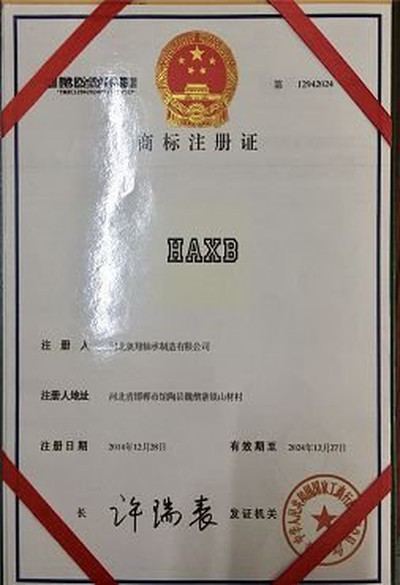
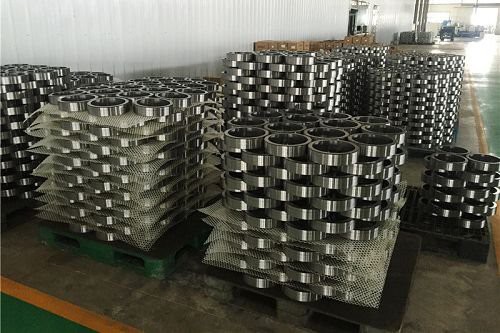
HAXB is a leading manufacturer of high quality deep groove ball bearings in China. Also including thin-walled, Tapered roller bearings. The rotation speed can hit over 25,000 rpm and can be adapted to all kinds of high speed motors. Our HAXB brand mainly produces medium and high-end bearings (ball bearings, needle roller bearings and self-lubricating bearings), hoping to provide users with more appropriate choices.


Q: What is a roller bearing used for?
Q: What is the application of rolling bearing and sliding bearing?
Q: What loads are roller bearings best suited for?
Q: What is the difference between a roller bearing and a ball bearing?
Q: What are the different types of roller bearings?
Q: What are the advantages of using roller bearings?
Q: How do you determine the correct size of a roller bearing?
Q: How do you install a roller bearing?
Q: How do you maintain a roller bearing?
Q: What is a cylindrical roller bearing?
Q: What factors should be considered when selecting a roller bearing?
Q: What are some common problems with roller bearings?
Q: What materials are used to make roller bearings?
Q: Can roller bearings withstand high temperatures?
Q: What is the difference between a roller bearing and a ball bearing?
Q: What is a spherical roller bearing?
Q: How can roller bearing failures be prevented?
Q: What is a needle roller bearing?
Q: How do I know when to replace a roller bearing?
Q: What is the difference between open and sealed roller bearings?
As one of the most professional roller bearing manufacturers and suppliers in China, we're featured by quality products and competitive price. Please rest assured to buy high-grade roller bearing for sale here from our factory.
forklift bearings, engine bearings, labeling machine bearings(0/10)



