
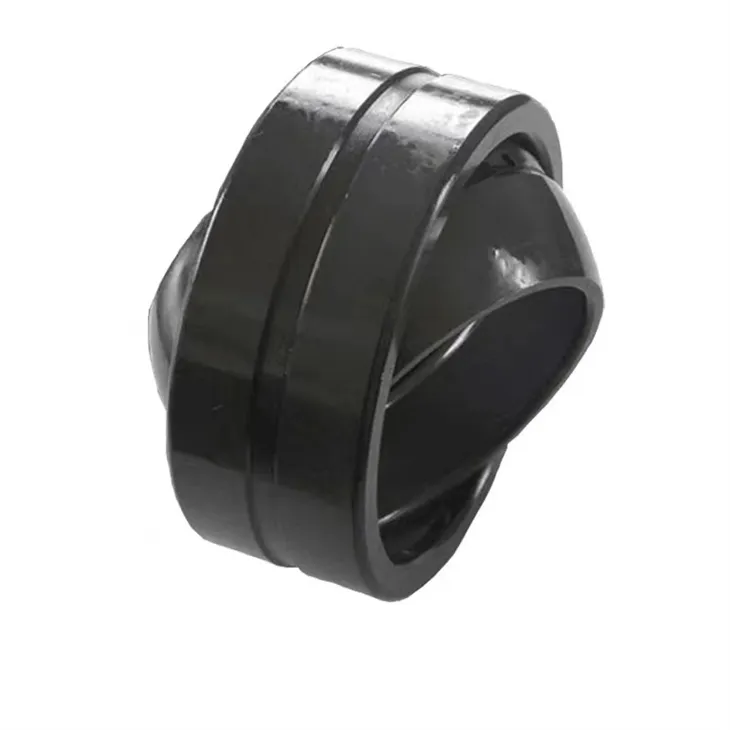
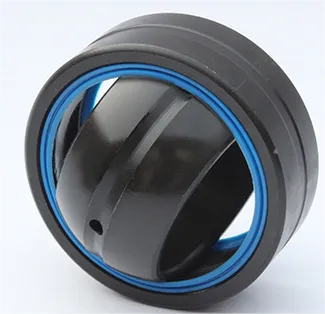
Spherical Plain Bearings are a type of spherical sliding bearings, with sliding contact surfaces consisting of an inner spherical surface and an outer spherical surface. They can rotate and swing at any angle during movement. They are made using various special processing methods such as surface phosphating, blasting, pad insertion, and spraying.
Spherical Plain Bearings have the characteristics of high load capacity, impact resistance, corrosion resistance, wear resistance, self aligning, and good lubrication.
Why Choose Us
Professional Team
Professional sales team and engineer team provide professional technical Support,Test video and Sample support
High Quality
Our products are manufactured or executed to very high standards, using the finest materials and manufacturing processes.
Competitive Price
We offering a higher-quality product or service at an equivalent price. As a result we have a growing and loyal customer base.
24H Online Service
If you have difficulties when using the product, we will respond to your needs as soon as possible and give you the greatest support.
Spherical plain bearings are versatile components used in various applications where rotational or oscillating movements occur. These bearings are designed to accommodate misalignment and provide smooth and reliable operation. Here are some typical applications for spherical plain bearings
Automotive Industry
Spherical plain bearings are used in vehicle suspension systems, steering columns, and drivetrain components to handle the dynamic loads and vibrations experienced by vehicles.
Construction and Mining Equipment
These bearings are widely used in construction and mining machinery such as excavators, loaders, bulldozers, and cranes to withstand heavy loads, shock, and impact.
Aerospace
Spherical plain bearings are utilized in aerospace applications, including aircraft landing gears, control systems, and wing flap mechanisms, where they provide necessary articulation and support under varying forces.
Agricultural Machinery
Spherical plain bearings are employed in agricultural equipment like tractors, combine harvesters, and tillers, enabling smooth movement of rotating and pivoting parts.
Industrial Machinery
They find extensive use in industrial machinery such as conveyor systems, robotics, material handling equipment, and manufacturing machinery, where they support rotational and oscillating movements.
Power Generation
Spherical plain bearings are employed in various power generation equipment, including wind turbines, hydroelectric turbines, and steam turbines, to facilitate smooth rotation and support heavy loads.
Marine Applications
These bearings are used in marine equipment and systems, including deck machinery, propulsion systems, steering gear, and adjustable pitch propellers, due to their ability to handle corrosive environments and dynamic loads.
Railway Industry
Spherical plain bearings are utilized in railcar suspension systems, couplings, and bogies to withstand heavy loads, vibrations, and misalignments commonly encountered in railway applications.

Manufacturing process Spherical Plain Bearing
Forging
Special steel is hammered and extruded through forging machinery to make the internal structure of the steel tight and improve strength and wear resistance.
Heat treatment
The forged Spherical Plain Bearing is heat treated, and the internal crystal structure of the steel is controlled through heating and cooling processes to achieve the required mechanical properties and physical and chemical properties.
Turning
The forged and heat-treated Spherical Plain Bearingare processed with CNC machine tools according to the design requirements, and their appearance and size are processed within the accuracy range.
Assembly
Assemble the processed components, including mounting, assembly, calibration and other links to ensure the accuracy and reliability of the spherical bearing.
Surface treatment
The surface of the spherical bearing is treated through passivation, spraying, sandblasting and other processes to prevent oxidation, corrosion and wear.
The Following Factors Need To Be Considered When Selecting Spherical Plain Bearing
Bearing load
The maximum load borne by the spherical bearing is the primary factor in selecting the bearing. The appropriate bearing type and specification need to be selected based on the actual load.
Working Environment
The working environment of spherical bearings may involve factors such as temperature, humidity, corrosion, etc. It is necessary to select bearing materials and lubrication methods that can adapt to the environment.
Cost And Cost Performance
In addition to the above considerations, cost and cost performance are also important factors in selecting spherical bearings. The corresponding price range and quality level should be selected according to the needs of the actual application.
Movement mode
The movement modes of spherical bearings include rotation, rolling, swing and offset, etc. It is necessary to choose a suitable bearing type.
Overload Capacity
Spherical bearings may encounter instantaneous overload during operation, and it is necessary to select bearings that can withstand such overload and avoid damage.
Installation And Disassembly
When choosing a spherical bearing, you need to consider the ease of installation and disassembly, so that it can be more convenient and faster when replacement or repair is needed.
Spherical bearings and spherical roller bearings are two different types of bearings. The main difference lies in their different structures and application scenarios.
A spherical plain bearing is a bearing that allows a certain angular deviation between two axes. Its structure can rotate and rotate freely. It is suitable for occasions where the connection needs to withstand large angular deviations, such as some heavy machinery and ships. The spherical plain bearing is composed of an inner ring, an outer ring and a hinge ball. The spherical surfaces of the inner and outer rings are arc surfaces.
Spherical roller bearings are a type of bearing used to withstand high loads and large angular deviations. Their structure consists of inner and outer rings and rolling elements (rollers). The diameter and length of the roller are larger than those of the sphere and can withstand higher loads. At the same time, due to the particularity of its structure, it can allow the angular deviation between the shaft and the shaft shell to be within a certain range. It is suitable for rotating parts and high-speed rotating machinery. occasion.
Lubrication is very important to the performance of spherical bearings. A good lubrication system can reduce friction and wear and increase bearing life and performance. Lubrication can affect the following aspects

Friction
Lubrication can effectively reduce the friction coefficient, lower the operating temperature, and increase the viscosity of the lubricating oil, thereby reducing bearing losses.
Wear
Lubrication can reduce bearing wear. If you use the proper lubricant, you can reduce friction and reduce bearing wear, thereby extending bearing life.

Cooling
In high-speed rotating bearings, lubricating oil absorbs and dissipates heat through the load-bearing parts, thereby effectively cooling the bearings.

Corrosion
Lubricating oil can prevent internal and surface corrosion of the bearing, thereby avoiding damage to the bearing.
The working principle of the Spherical Plain Bearing is to use a rod-shaped or spherical ball head to rotate or roll in the socket, so that the two connecting parts can rotate or rotate, and at the same time, it can withstand the corresponding load from the outside world. The following describes the working principle of Spherical Plain Bearing in detail.
Spherical bearings usually consist of a socket and a ball head. The socket is a groove-like part, and the ball head is a ball-like part. The contact area between the ball head and the socket is very small, only a small part of the surface area, which ensures good contact and flexible rotation between them.
When the two connecting parts rotate or rotate, the strangely shaped ball head is forced to rotate or roll in a small space, and the force and moment it bears will be evenly distributed between the ball head and the socket. .
The contact range between the ball head and the socket is limited, within which the rotation angle can be changed arbitrarily; and if this limit is exceeded, the ball head will not be able to continue rolling, causing the rotation or rotating connection part to be forcibly twisted. Therefore, the spherical bearing has the characteristics of bearing large angular displacement, so attention should be paid to its limitation of rotation angle.
When designing Spherical Plain Bearing, factors such as material selection, accuracy and processing technology of parts need to be considered. The design of spherical bearings should be reasonable, able to withstand specific loads and motion trajectories, and can meet corresponding environmental requirements and complex application scenarios.

Spherical Plain Bearing are composed of two basic parts: the inner ring and the outer ring. The inner ring is usually round or cylindrical, while the outer ring is arc-shaped and has a spherical boss to accommodate the inner ring. Guide surfaces are used on both sides of the bearing to control movement between the inner and outer rings. The guide surface may be flat or tapered, depending on the type of bearing.
Between the two basic parts, some additional parts are usually added to improve the performance of the spherical bearing. These parts may include nuts, washers, shock absorbers, seals and lubricants. Nuts can be used to adjust the tightness of the bearing to ensure stable movement between the inner and outer rings. Washers can be used to change the height or thickness of the bearing to suit different bearing applications. Shock absorbers reduce noise and vibration. Seals protect the inside of the bearing from contamination by dust and other debris, as well as prevent lubricant leakage. Lubricants provide the lubrication needed internally to reduce friction and wear.
These parts may vary in different spherical plain bearings, but they are still the basic building blocks of spherical plain bearings. The combination of these parts can produce a wide range of bearing types, such as roller bearings, plain bearings and ball bearings, etc. in a variety of different industrial and mechanical applications.
The Steps For Installing Spherical Plain Bearing Are As Follows
Clean The Surface
First, you need to clean the surface of the spherical bearing and its installation location to ensure that it can be installed correctly.
Lubricate The Rod End
Before installation, a layer of grease should be applied to the lubricated rod end to increase the service life of the spherical bearing.
Install The Bearing
Insert the spherical bearing into the installation position and ensure its correct positioning. If the bearing is of the piston ring seal type, the bearing should be installed in the center of the seal ring. If it is a rubber seal type, the bearing should be placed along the sealing ring.
Fix The Bearing
Use the appropriate tools to correctly fix the spherical bearing in the installation position.
Connect The Steering Mechanism
Connect the drive shaft to the steering mechanism, making sure it fits perfectly and is not loose.
Check Installation
Before final alignment and adjustment, the spherical bearings should be tested. The steering mechanism and other related components should be fully tested to ensure correct installation.
Maintenance-free spherical plain bearings are available with outer rings made of hardened carbon chromium steel, carbon steel or hardened stainless steel. Those made from hardened chromium carbon steel or stainless steel will have axial or radial cracks to accommodate ball entry. The carbon steel outer ring can be pressed around the inner ring, or it can have radial splits that hold it together with screws. The inner rings of maintenance-free spherical plain bearings are made of hardened carbon chromium steel, hardened stainless steel or copper alloys.
The sliding surfaces between these types of spherical plain bearings could have hard chromium plating, PTFE composite, PTFE fabric, or PTFE plastic to reduce wear. Those with copper alloy inner rings will have solid lubricant inserted on the sliding surface. Outer and inner rings can be phosphate coated to increase corrosion resistance. Some bearing designs can also be fitted with seals to keep out contamination. Variations with multiple axial split outer rings can be fitted with retaining rings.
Yes, spherical plain bearings can be customized in several ways for specific applications
Bore size: The bore is the inner diameter where the bearing mounts onto a shaft. Bore sizes can be made to specification to fit different shaft sizes.
Outside diameter: The outer diameter of the bearing's spherical outer ring can be customized to fit different housing sizes.
Materials: Bearings can be made out of different materials like metal alloys or composites to suit load capacity, environmental, and friction requirements.
Internal clearance: The internal diametral clearance between the inner and outer ring raceways can be adjusted to suit the precision needs of the application. More clearance allows more misalignment but can increase play.
Preload: The internal geometry can create a preload force between inner and outer rings for applications that require less freeplay.
Corrosion protection: Features like seals or coatings can add corrosion resistance for harsh environments.
Lubrication features :Bearings can have custom grooves, holes or other features to direct lubricant to critical areas.
Spherical plain bearings are used in a variety of applications where smooth and reliable movement is required. The materials used for spherical plain bearings can vary depending on the specific application and the desired characteristics, but some of the most common materials include steel, ceramic, and stainless steel.
Steel is a popular material for spherical plain bearings because it is strong and durable, able to withstand high loads and temperatures. It is also relatively inexpensive and easy to work with. steel can rust over time if exposed to moisture, which can reduce its performance and lifespan.
Ceramic is another popular material for spherical plain bearings, particularly in high-performance applications where precision and accuracy are critical. Ceramic bearings are very smooth and have low friction coefficients, allowing for high-speed and low-noise operation. However, ceramic is more brittle than steel and can be damaged by shock or impact.
Stainless steel is a corrosion-resistant alternative to steel that is commonly used in applications where the bearing will be exposed to moisture or other corrosive environments. It is also stronger and more durable than many other materials, making it a good choice for high-load applications. stainless steel bearings can be more expensive than other materials.
The materials used for spherical plain bearings can vary depending on the specific application and the desired characteristics, but common materials include steel, ceramic, and stainless steel. Each material has its own advantages and disadvantages, and the choice of material depends on factors such as load rating, speed, temperature, and environmental conditions.
How Do i Know When To Replace a Spherical Plain Bearing
Here are some tips on when to replace a spherical plain bearing:
Listen for noises. If the bearing is making grinding, squeaking, or other unusual noises during operation, it likely needs replacement.
Check for play/looseness. Grab the inner and outer races of the bearing and see if there is any radial or axial movement that seems excessive. Some play is normal, but too much can indicate wear.
Look for wear on the bearing surfaces. Over time, the spherical outside surface and inner raceway wear. If you see uneven grease distribution, excessive scratches, or a dull finish, the bearing may be worn out.
Note vibration or wobble. If the shaft or housing vibrates excessively during operation, it could mean the bearing is worn and needs replacement.
Pay attention to temperature. Bearings that run hotter than similar bearings on the same machine may indicate excessive friction and wear.
Consider age and usage. Hour meters, calendars, or machine logs will give a clue about bearing age and . Bearings have a typical design before needing replacement.
Check manufacturer instructions. Replacement intervals may be specified based on application, loads, speeds, and environment. Following these can prevent unplanned downtime.
Performing periodic inspections and scheduled maintenance of spherical plain bearings can help avoid operational disruptions from unexpected failures.



Our Factory
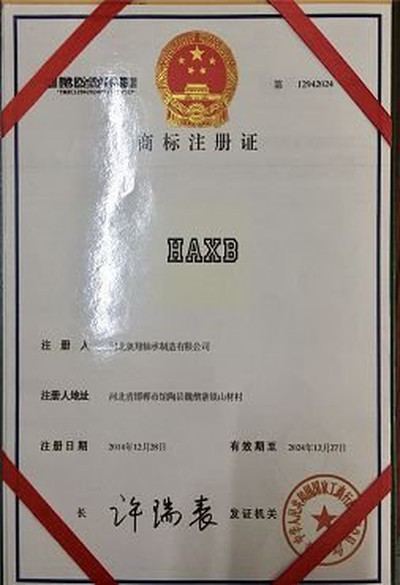
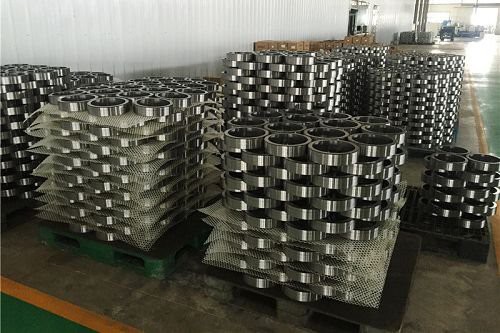
HAXB is a leading manufacturer of high quality deep groove ball bearings in China. Also including thin-walled, Tapered roller bearings. The rotation speed can hit over 25,000 rpm and can be adapted to all kinds of high speed motors. Our HAXB brand mainly produces medium and high-end bearings (ball bearings, needle roller bearings and self-lubricating bearings), hoping to provide users with more appropriate choices.


Q: What are spherical plain bearings used for?
Q: What is the difference between spherical and cylindrical bearings?
Q: What are the advantages of spherical bearings?
Q: What types of maintenance are required for spherical plain bearings?
Q: What is the difference between spherical plain bearings and spherical roller bearings?
Q: What is a spherical plain bearing?
Q: What are the main applications of spherical plain bearings?
Q: What are radial spherical bearings?
Q: What are the different types of spherical plain bearings?
Q: How does a spherical plain bearing work?
Q: Can spherical plain bearings be customized for specific applications?
Q: What is the load capacity of a spherical plain bearing?
Q: What materials are used for spherical plain bearings?
Q: How are spherical plain bearings installed?
Q: How do I know when to replace a spherical plain bearing?
Q: What factors should I consider when selecting a spherical plain bearing?
Q: What are the benefits of using spherical plain bearings?
Q: What are rod-end bearings?
Q: What is the difference between a spherical plain bearing and a ball bearing?
Q: What are some common maintenance procedures for spherical plain bearings?
As one of the most professional spherical plain bearing manufacturers and suppliers in China, we're featured by quality products and competitive price. Please rest assured to buy high-grade spherical plain bearing for sale here from our factory.
sheave spherical plain bearing, telephone spherical plain bearing, spherical bearing(0/10)



