




How do these advancements improve needle bearing performance?
 Jul 31, 2025|
In the realm of mechanical engineering, needle bearings stand as unsung heroes, playing a pivotal role in a wide array of applications. These compact yet robust bearings are designed to handle high radial loads in confined spaces, making them indispensable in industries such as automotive, aerospace, and industrial machinery. As a leading needle bearing supplier, I've witnessed firsthand the remarkable advancements that have revolutionized the performance of these essential components. In this blog, I'll delve into how these advancements have improved needle bearing performance, highlighting specific technological breakthroughs and their real-world implications.
Material Innovations
One of the most significant factors contributing to the enhanced performance of needle bearings is the development of advanced materials. Traditional bearing steels have long been the standard, but recent years have seen the emergence of high-performance alloys and ceramics that offer superior properties.
High-performance alloys, such as carburized steels and through-hardened steels, are engineered to withstand extreme loads and harsh operating conditions. These materials have excellent wear resistance, fatigue strength, and dimensional stability, ensuring longer service life and reduced maintenance requirements. For example, the use of carburized steels in needle bearings allows for a hard, wear-resistant surface layer while maintaining a tough core, providing optimal performance in high-stress applications.
Ceramic materials, on the other hand, offer unique advantages in terms of their high hardness, low density, and excellent corrosion resistance. Silicon nitride (Si3N4) is a commonly used ceramic material in needle bearings, known for its high strength-to-weight ratio and superior thermal stability. Ceramic needle bearings can operate at higher speeds and temperatures than their steel counterparts, making them ideal for applications in high-performance engines and precision machinery.
Manufacturing Precision
Advancements in manufacturing technology have also played a crucial role in improving needle bearing performance. Precision machining processes, such as grinding and honing, allow for tighter tolerances and smoother surfaces, reducing friction and wear. Computer numerical control (CNC) machining has further enhanced the accuracy and consistency of needle bearing production, ensuring that each bearing meets the exact specifications required for optimal performance.
In addition to precision machining, advanced manufacturing techniques such as cold forming and hot forging have been developed to produce needle bearings with improved material properties and dimensional accuracy. Cold forming, for example, allows for the production of complex shapes and geometries with minimal material waste, resulting in stronger and more durable bearings. Hot forging, on the other hand, can improve the grain structure of the material, enhancing its mechanical properties and fatigue resistance.
Lubrication and Sealing
Proper lubrication is essential for the smooth operation and long-term performance of needle bearings. Advancements in lubricant technology have led to the development of high-performance lubricants that offer superior protection against wear, corrosion, and oxidation. Synthetic lubricants, such as polyalphaolefins (PAOs) and esters, have excellent thermal stability and low friction coefficients, making them ideal for use in high-speed and high-temperature applications.
In addition to lubricants, the design of bearing seals has also evolved to provide better protection against contaminants and moisture. Sealed needle bearings are now available with a variety of sealing options, including contact seals, non-contact seals, and labyrinth seals. These seals help to keep lubricant in and contaminants out, extending the service life of the bearing and reducing the risk of premature failure.
Design Optimization
Another area where significant advancements have been made is in the design of needle bearings. Computer-aided design (CAD) and finite element analysis (FEA) tools have allowed engineers to optimize the geometry and structure of needle bearings for specific applications. By analyzing the stress distribution and load capacity of the bearing, engineers can design bearings that are more efficient, reliable, and durable.
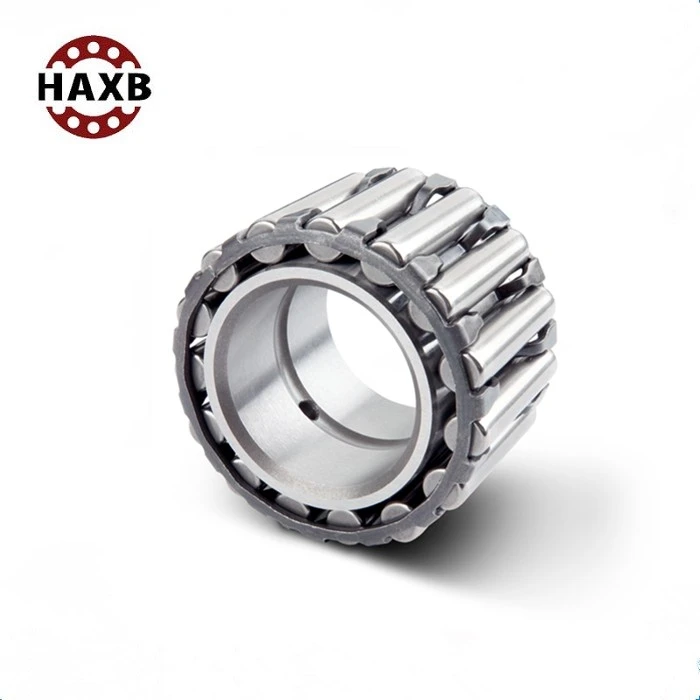

For example, the use of crowned rollers in needle bearings can help to reduce stress concentrations and improve load distribution, resulting in longer service life and reduced noise and vibration. Additionally, the design of the cage, which holds the needles in place, has also been optimized to improve its strength, stiffness, and lubrication properties.
Real-World Applications
The advancements in needle bearing technology have had a profound impact on a wide range of industries. In the automotive industry, for example, needle bearings are used in engines, transmissions, and suspension systems to reduce friction and improve fuel efficiency. The use of high-performance needle bearings in engines allows for higher compression ratios and more precise valve timing, resulting in increased power and torque.
In the aerospace industry, needle bearings are used in aircraft engines, landing gear, and control systems to withstand high loads and extreme temperatures. The lightweight and high-strength properties of ceramic needle bearings make them particularly suitable for aerospace applications, where weight reduction is critical for fuel efficiency and performance.
In the industrial machinery sector, needle bearings are used in a variety of applications, including machine tools, robotics, and conveyor systems. The high precision and reliability of needle bearings ensure smooth operation and accurate positioning, improving productivity and reducing downtime.
Our Product Offerings
As a leading needle bearing supplier, we offer a wide range of high-quality needle bearings to meet the diverse needs of our customers. Our product portfolio includes NKI90/36 Needle Roller Bearings, RNA4824-XL Needle Roller Bearings, and BK2016CNC Machine Tool Bearings, among others.
Our needle bearings are manufactured using the latest materials and manufacturing techniques, ensuring superior performance and reliability. We also offer customized solutions to meet the specific requirements of our customers, including special sizes, materials, and coatings.
Conclusion
The advancements in needle bearing technology have significantly improved the performance, reliability, and durability of these essential components. From material innovations and manufacturing precision to lubrication and design optimization, these advancements have enabled needle bearings to meet the ever-increasing demands of modern industries.
As a needle bearing supplier, we are committed to staying at the forefront of these technological advancements and providing our customers with the highest quality products and services. If you're in need of needle bearings for your application, we invite you to contact us to discuss your requirements and explore our product offerings. Our team of experts will be happy to assist you in finding the right needle bearings for your needs.
References
- Harris, T. A., & Kotzalas, M. N. (2007). Rolling Bearing Analysis. Wiley-Interscience.
- Jones, A. (2019). Bearings in Machinery: Selection, Installation, Lubrication, and Maintenance. Industrial Press.
- Zorzi, C., & Concli, F. (2018). Rolling Bearing Technology: Design, Analysis, and Applications. CRC Press.